Pink Embroidery Flowers Digital Papers Review
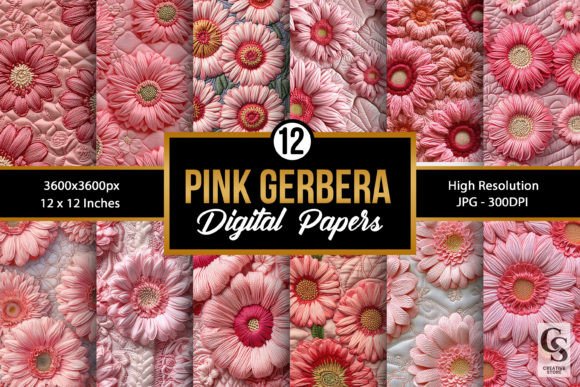
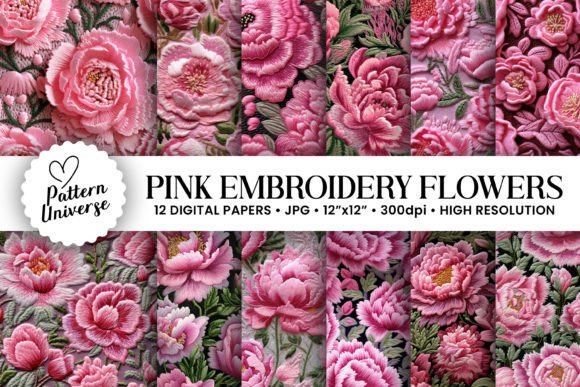
As an embroidery designer who spends most of my days troubleshooting tension issues and optimizing stitch paths, I approach every new design asset with a mix of skepticism and curiosity. When I first encountered Pink Embroidery Flowers Digital Papers, my initial instinct was to categorize it strictly as a graphic design element for print-on-demand products. However, the versatility of modern digital assets often blurs the line between flat graphics and textile applications. This review examines how this specific set of patterns performs when translated from screen to fabric, specifically for small business merchandise, branded patches, and custom apparel.
First Impressions: Visual Personality and Brand Alignment
The title Pink Embroidery Flowers Digital Papers suggests a soft, feminine, and decorative aesthetic. From a brand identity perspective, this immediately signals a target audience that appreciates elegance, playfulness, or a rustic handmade charm. The inclusion of "Seamless Patterns" in the description is crucial for us as designers because it implies scalability. For a boutique owner looking to create a cohesive visual language across multiple touchpoints—such as product labels, shopping bags, and staff uniforms—seamlessness allows for consistent repetition without awkward breaks.
Visually, these designs feel premium yet accessible. They are not overly ornate or heavy, which is a significant advantage for machine embroidery. In the world of small business merch, there is often a trap of choosing designs that look stunning on a monitor but become muddy blobs when stitched at three inches wide. These floral motifs appear to strike a balance between detail and clarity, making them suitable for brands that want to project professionalism without appearing stiff or corporate.
Real-World Applications for Small Businesses
Where does Pink Embroidery Flowers Digital Papers truly shine in a commercial setting? After analyzing the pattern structure, I see several high-value applications for entrepreneurs in the craft, retail, and service sectors.
- Embroidered Patches: One of the most profitable add-ons for any handmade brand is the embroidered patch. These seamless patterns can be isolated into individual flower clusters or used as a background texture behind a logo. A florist or bakery could use a subtle pink floral border on a chest patch to reinforce their brand colors.
- Staff Uniforms and Aprons: For cafes, salons, or boutiques, uniformity builds trust. Applying a single, well-placed floral motif from this set to the breast pocket of a work shirt or the bib of an apron adds a touch of personality. It transforms a generic garment into a branded piece of custom apparel.
- Tote Bag Design: Canvas tote bags remain a staple for market vendors and Etsy sellers. Because these are digital papers, they can be scaled to fill the entire bag or used as a corner accent. The seamless nature allows the pattern to wrap around seams if printed, or serve as a guide for a large, all-over embroidery layout.
- Cap Embroidery: Structured caps have limited real estate. A dense, complex floral design might fail here, but if the pattern offers lighter, spaced-out elements, it works beautifully on the front panel or side of a cap, appealing to customers who prefer understated branding.
- Product Packaging Accents: Even if not directly embroidered, these digital assets are invaluable for creating printable mockups. Showing a customer how a tea box or gift wrap looks with the same visual language as their embroidered tags creates a unified unboxing experience.
Strategic Considerations and Limitations
No design is perfect for every application. As a professional, you must evaluate where Pink Embroidery Flowers Digital Papers might struggle. Understanding these limitations prevents costly production errors and unhappy clients.
Scale and Stitch Density: If you attempt to embroider intricate details from this pattern at a very small size (under two inches), you risk losing definition. Fine lines may merge, and delicate petals might disappear. Always test the design at its intended final size. High stitch density can also cause puckering on lightweight fabrics like silk or thin cotton blends, so these patterns are better suited for medium-weight materials like denim, canvas, or structured polyester blends.
Curved Surfaces: While great for flat items like tote bags or aprons, applying detailed seamless patterns to curved surfaces like baseball caps or sleeves requires advanced digitizing techniques. The pattern may distort if not properly mapped to the curvature of the hoop.
Thread Color Contrast: Pink flowers on light backgrounds can sometimes lack contrast, especially if using standard polyester threads. On dark uniforms, a bright pink may pop too aggressively unless balanced with neutral stabilizers or backing. Always inspect spacing and ensure there is enough negative space for the eye to rest.
Impact on Brand Identity and Customer Trust
In the crowded marketplace of handmade goods, visual consistency is key to recognition. Using Pink Embroidery Flowers Digital Papers across your product line—from your website graphics to your physical merchandise—creates a subconscious link for your customers. It signals attention to detail and care. When a buyer sees that the same elegant floral theme appears on your social media, your packaging, and the embroidered label on their new tote bag, it elevates the perceived value of the finished product. It moves the item from a commodity to a curated brand experience.
Furthermore, the "handmade" aesthetic associated with floral motifs appeals to consumers who value authenticity. By integrating these designs into your commercial embroidery workflow, you reinforce the narrative that your business is crafted with love, not mass-produced by machines alone.
Practical Designer Notes for Production
Before you send these files to production, follow these essential steps to ensure quality:
- Test in Black and White: Convert the design to grayscale first. This helps you evaluate the contrast and spacing without being distracted by the color pink. If it doesn’t read well in black and white, it won’t embroider well.
- Check Hoop Size Compatibility: Ensure the design dimensions fit within your machine’s maximum hoop size, especially if you plan to expand the pattern for larger items.
- Use Proper Stabilizer: The choice of stabilizer (cut-away vs. tear-away) will drastically affect the final look. For stretchy fabrics or heavy garments, a cut-away stabilizer is non-negotiable to maintain shape over time.
- Create a Printable Mockup: Before committing to expensive thread and fabric, generate a digital mockup. Place the pattern on images of your actual products to visualize scale and placement.
- Confirm Commercial Licensing: Verify that the license for Pink Embroidery Flowers Digital Papers permits commercial use. Some digital assets are restricted to personal crafting only. Using them for resale without permission can lead to legal issues.
- Compare Against Other Assets: Lay this design next to your existing logo or other design assets to ensure tonal harmony. Does the pink match your brand palette? Is the style consistent?
In conclusion, Pink Embroidery Flowers Digital Papers offers a versatile foundation for small businesses looking to enhance their visual identity through embroidery. While it requires careful consideration of scale, fabric, and licensing, its potential to elevate brand identity and engage customers through cohesive, handmade-style aesthetics makes it a valuable addition to any designer’s toolkit. Just remember to always test before you invest.